

But Isn't the Bible the Word of God?
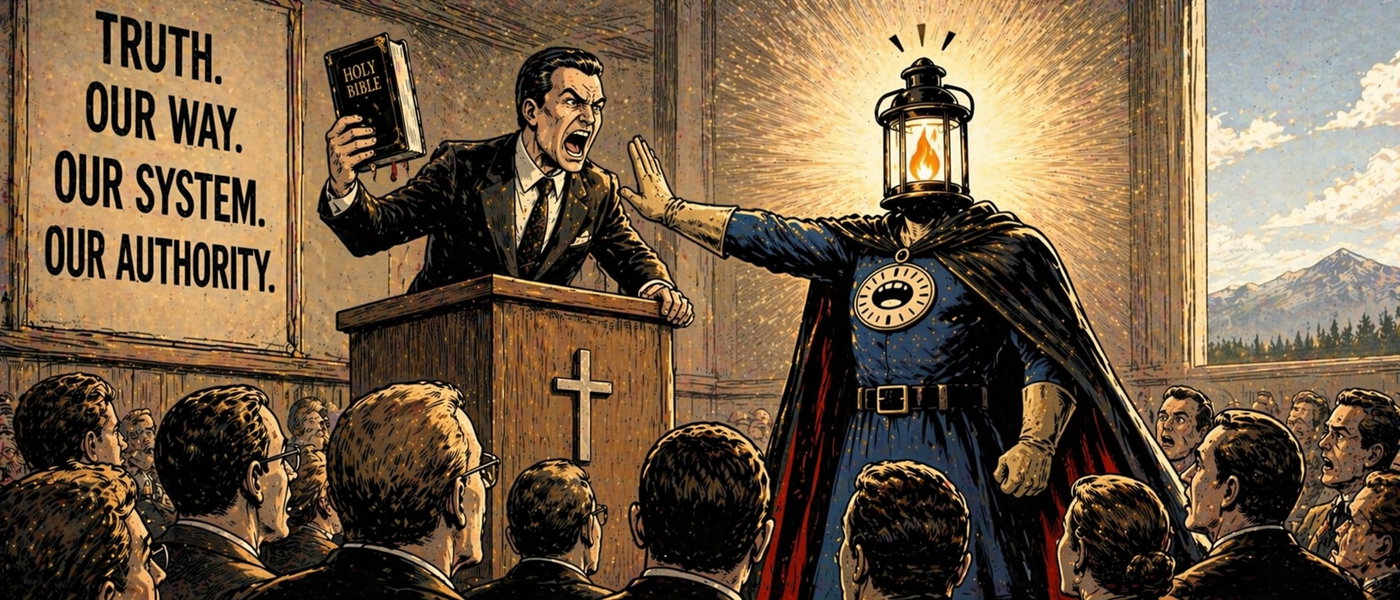
You were told the Bible is the Word of God.
You said it. You sang it. You probably taught it. When you asked for proof, three passages were handed to you.
2 Timothy 3:16. Mark 7:13 (and its parallel in Matthew 15:6). Hebrews 4:12.
The claim does not survive those three passages.
First, the Standard
You are making a positive claim: the Bible is the Word of God.
In Scripture and in normal language, a title has to be given, not inferred or assumed. Isaac was named. Jesus was named. Nobody argues that Isaac was called Isaac because certain descriptions fit him. The name was spoken.
The same standard runs through every honest setting. In debate, the one making the claim carries the burden of proof. In court, evidence is required. Inference is not evidence. Belief is not evidence.
So the question is simple.
Point to one verse that gives the title "the Word of God" to the Scriptures.
Not a verse that says Scripture contains God's words. Not a verse that says Scripture is inspired. A verse that assigns the title.
That verse does not exist.
The three passages raised against the distinction are the usual stand-ins. None of them does what the objection needs it to do.
Objection 1: "Scripture is God-breathed, so Scripture is the Word of God."
2 Timothy 3:16-17
All Scripture is God-breathed and is useful for teaching, rebuking, correcting and training in righteousness, so that the servant of God may be thoroughly equipped for every good work.
The verse itself does not assign the title
The word "God-breathed" gets silently upgraded from a statement about inspiration to a statement about title. The verse does not do the upgrade. The reader does.
Inspiration is the category of the messenger.
Paul was inspired. Paul is not the Word of God. The prophets were inspired. The prophets are not the Word of God. Peter and John wrote under inspiration. They carried the message. They never held the title.
The Word is the message that came from God's own mouth (Isaiah 55:11, Proverbs 2:6). 2 Timothy 3:16 puts Scripture in the category of inspired messenger. The verse does not put it in the category of titled Word.
Even read in the strongest possible light, "God-breathed" yields "Scripture is inspired." It does not yield "Scripture is titled the Word of God." Those are two different claims. The verse only speaks to the first.
And "God-breathed" is not what the Greek actually says
"God-breathed" is a recent English rendering. It is not supported by the classical use of the Greek word theopneustos.
The standard New Testament Greek lexicon, BDAG, defines theopneustos as "inspired by God." Not "breathed out." The word describes people or writings under divine influence, the way we still say a poem is "inspired." That is what the Greek has said as long as the Greek has been read. Major New Testament commentaries across the theological spectrum land on the same reading.
This is not a fringe translation. It is the mainstream, longest-standing one.
Two problems for the objection
The objection has to clear two bars and clears neither.
First, the verse does not assign the title. Inspiration is not title.
Second, the word the objection leans on does not mean what the English makes it sound like. It means inspired, not breathed out.
The question for anyone still holding the claim is the one any honest inquiry asks. Are you approaching the passage with your confirmation bias in place, or removed?
The verse says Scripture is inspired. That is all it says.
Objection 2: "Jesus called the commandment the word of God." (Mark 7:13 and Matthew 15:6)
This objection travels in two forms. Some cite Mark 7. Some cite Matthew 15. They are the same event in two Gospel writers, and both record Jesus using the phrase "the word of God." Both are handled together here, because both say the same thing and both fail the objection for the same reason.
Mark 7:9-13
And he said to them, "You have a fine way of rejecting the commandment of God in order to keep your tradition! For Moses said, 'Honor your father and your mother'; and, 'He who speaks evil of father or mother, let him surely die.' But you say, 'If a man tells his father or his mother, What you would have gained from me is Corban (that is, given to God)' ... then you no longer permit him to do anything for his father or mother, thus making void the word of God through your tradition which you hand on. And many such things you do."
Matthew 15:3-9
He answered them, "And why do you break the commandment of God for the sake of your tradition? For God commanded, 'Honor your father and your mother,' and, 'Whoever reviles father or mother must surely die.' But you say, 'If anyone tells his father or his mother, "What you would have gained from me is given to God," he need not honor his father.' So for the sake of your tradition you have made void the word of God. You hypocrites! Well did Isaiah prophesy of you, when he said: 'This people honors me with their lips, but their heart is far from me; in vain do they worship me, teaching as doctrines the commandments of men.'"
The objection pulls "the word of God" from either verse and concludes: Jesus uses the phrase, so the Scriptures must carry the title.
Both passages say something different.
What Jesus actually calls the word of God
He cites one command. Honor your father and your mother. That is what He labels "the word of God."
Not the Torah as a whole, not the whole of Scripture. One command.
The command has an origin.
Exodus 20:1, 12
Then God spoke all these words... "Honor your father and your mother, that your days may be long in the land that the Lord your God is giving you."
The command did not begin on a page. It began in God's mouth. Moses wrote it down afterward. The writing preserved the Word. The writing is not the Word.
The Hebrew language already marks this
The Ten Commandments in Hebrew are called devarim. The word means "the words," or more precisely, "the spoken words." The Hebrew language itself distinguishes between what God spoke and what was later written down. The name given to the commandments points to their origin in God's voice, not to their later form as a written text.
So when Jesus says "the word of God" in Mark 7:13 and Matthew 15:6, He is pointing at the spoken command. Not at the page that preserves it. Not at the Scriptures as a whole. A specific thing, spoken by God, called by its proper category.
What Jesus is doing
Jesus is accusing the Pharisees of replacing what God spoke with what men wrote down as tradition.
That is the same move this whole argument is making. Jesus is drawing a line between what came from God's mouth and the human material that grew up around it. He is not lumping the two together under one title. He is separating them.
Matthew preserves the sharpest form of the line. After saying the Pharisees have made void the Word of God for the sake of their tradition, Jesus quotes Isaiah 29:13 against them.
"In vain do they worship me, teaching as doctrines the commandments of men." (Matthew 15:9)
The objection wants "the word of God" to cover everything the Pharisees held in their hands: the Torah, the oral tradition, the handed-down teachings, the body of written and spoken material all together. Jesus will not let the categories merge. He calls the spoken Sinai command "the word of God." He calls the surrounding body of human teaching "the commandments of men." Two categories, explicitly named, in the same breath.
The passage used as an objection to the distinction is itself one of the sharpest statements of the distinction in the Gospels.
Titles must be explicitly given, not inferred. Mark 7 and Matthew 15 give no title to the Scriptures. They identify what God spoke as His Word, and they watch men bury that Word under the things they wrote down and handed on.
Quoting either passage to prove the Bible is the Word of God requires ignoring the sentence the quote sits inside.
Objection 3: "Hebrews 4:12 says the Word of God is living and active."
This is the objection most often treated as unanswerable.
Hebrews 4:12-13
For the Word of God is living and active, sharper than any two-edged sword, piercing to the division of soul and spirit, of joints and marrow, and discerning the thoughts and intentions of the heart; and before Him no creature is hidden, but all are open and laid bare to the eyes of Him with whom we have to give an account.
1. The only Person Scripture ever names "the Word of God" is Jesus
Scripture uses the phrase "word of God" in several ways for messages.
The Gospel proclaimed (1 Thessalonians 2:13).
The message that goes out from God's mouth (Isaiah 55:11).
The seed sown in hearts (Luke 8:11).
In every one of those uses, "the word of God" is a message, not a Person.
But when Scripture names a Person by the title "The Word of God," there is only one.
Revelation 19:13
He is clothed in a robe dipped in blood, and the name by which He is called is the Word of God.
The Bible is never given this name. No prophet, no apostle, no angel is ever given this name. One Person, named explicitly, by Scripture. Jesus.
When Hebrews 4:12 uses the same phrase as the subject of living, piercing, and discerning, and verse 13 describes a Person with eyes and sight, the identification is not a leap. It is the only option Scripture leaves on the table. The Word that became flesh in John 1:14 is the Word described in Hebrews 4:12.
2. Verse 13 uses personal pronouns that cannot refer to a book or a message
Hebrews 4:13
And before Him no creature is hidden, but all are open and laid bare to the eyes of Him with whom we have to give an account.
Before Him. The eyes of Him. The One we stand before.
The Greek is personal and masculine throughout.
"Before Him" is enōpion autou. A personal referent.
"To the eyes of Him" is tois ophthalmois autou. A book has no eyes. A message has no eyes.
"To whom we have to give account" is pros hon hēmin ho logos. The relative pronoun refers to a Person we stand accountable to.
The author of Hebrews does not say "before it." He does not say "to the eyes of it." He does not say "to which we give account." He uses personal, masculine forms throughout, because the subject he carried over from verse 12 is a Person.
You do not stand before a book on the last day.
3. The conjunction between the verses makes the subject-switch impossible
Verse 13 begins with "and." In Greek, kai. The word ties verse 13 directly to verse 12. The subject does not change across the connective.
Whatever is living in verse 12 is the same one whose eyes are looking in verse 13. The passage is one sentence of thought. Split the subject between verses and you have to break a Greek conjunction to do it. Nothing in the grammar permits that break.
4. Every trait in verse 12 matches Jesus exactly
"Living." Jesus is "the Living One."
Revelation 1:18
I am the first and the last, and the living one. I died, and behold I am alive forevermore.
"Sharper than any two-edged sword." Jesus is the one with a two-edged sword coming from His mouth.
Revelation 1:16
From His mouth came a sharp two-edged sword.
Revelation 2:12
The words of Him who has the sharp two-edged sword.
Revelation 19:15
From His mouth comes a sharp sword with which to strike down the nations.
"Piercing to the division of soul and spirit." Jesus knew what was in man.
John 2:25
He needed no one to bear witness about man, for He Himself knew what was in man.
"Discerning the thoughts and intentions of the heart." Jesus searches mind and heart.
Revelation 2:23
I am He who searches mind and heart.
Every description in Hebrews 4:12 applies to Jesus personally. A message does not live. A book does not judge the thoughts and intentions of the heart. Only a living Person does these things, and Scripture identifies that Person by name.
5. The One we give account to is Jesus
Verse 13 ends by naming the One before whom all are laid bare, the One we must give account to.
John 5:22
The Father judges no one, but has given all judgment to the Son.
2 Corinthians 5:10
For we must all appear before the judgment seat of Christ.
The One in verse 13 is Jesus. If verse 13 is about Jesus, verse 12 has to be about Jesus too. The two verses share a subject. The grammar does not permit the subject to swap mid-sentence.
6. The verbs in Hebrews 4:12 are verbs of personal action, not verbs of speech
When Scripture refers to a spoken or preached message, it uses verbs of speaking. Legō, which means "says." Laleō, which means "speaks." The New Testament is full of these verbs whenever the message itself is in view.
Hebrews 4:12 uses none of them.
Instead it uses verbs of personal action. Living. Piercing. Discerning. The passage then describes something that sees, something we stand before, something we give account to.
This is not how Scripture describes a message acting on its own. This is how Scripture describes a living Person acting on us.
The verbs alone rule out an impersonal reading. Even if every other point in this section were set aside, the verbs would settle it.
What the objection has to refuse to see
Every thread in the passage runs to Jesus. To keep the impersonal reading, a reader has to refuse to see:
The one name Scripture assigns to any Person by the title "The Word of God" (Revelation 19:13).
The pronoun chain in verse 13 that the Greek renders personal and masculine throughout.
The kai connective that fuses verse 13 to verse 12 with a shared subject.
Every trait in verse 12 and the Revelation passages that map each trait to Jesus by name.
The verbs in verse 12, which are verbs of personal action and never verbs of speech.
John 5:22 and 2 Corinthians 5:10, which name Jesus as the One to whom we give account.
John 1:14, which names the moment the Word became flesh.
Ignoring one of these is reading carelessly. Ignoring all of them is refusing to read.
One simple question
Can a book become a He?
Three Passages. Three Readings. Same Result.
2 Timothy 3:16 says Scripture is inspired. It does not assign the title.
Mark 7:13 and Matthew 15:6 call a specific spoken command "the word of God" and explicitly contrast God's Word with "the commandments of men." Both passages confirm the distinction instead of erasing it.
Hebrews 4:12 describes a Person. The only Person Scripture ever titles "The Word of God" is Jesus.
The burden of proof has not been met. The three verses raised against the distinction do not assign the title. No verse does.
Scripture Itself Marks the Difference
Scripture uses "the Word" and "the Scriptures" as two different names for two different things. Jesus draws the line. Luke records the same distinction in action. And when the claim that the two are the same is tested against either passage, the sentence collapses into a logical fallacy so basic it would not survive a freshman class.
What a tautology is
A tautology is a sentence that breaks because two different things have been made into one. The sentence needed both of them to work. When they collapse into the same thing, the sentence says nothing.
You do not need the Bible to see how this works. You already know.
"I used the answer key to check my test." That sentence works. Two things: the test, and the answer key. Now make them the same thing. "I used the test to check my test." You checked the test against itself. Every answer matches. Nothing was verified. The sentence is useless.
"She showed them a photo so they could find the person at the airport." That sentence works. Two things: the photo, and the person. Now make them the same thing. "She showed them the person so they could find the person at the airport." If you already have the person, there is no one to find. The sentence does nothing.
"He used the address to find the house." That sentence works. Two things: the address, and the house. Now make them the same thing. "He used the house to find the house." If you already have the house, you do not need to find it. If you do not have it, you cannot use it to find itself. The sentence breaks.
Every one of these collapses the same way. A sentence that needs two things to work is given one. The logic closes in on itself and the sentence stops saying anything.
That is exactly what happens when someone says the Bible is the Word of God and then reads what Jesus and Luke actually wrote.
The test on Jesus's own words
John 5:39-40 You search the SCRIPTURES because YOU THINK THAT IN THEM YOU HAVE ETERNAL LIFE; and yet it is THEY THAT TESTIFY ABOUT ME; and you are unwilling to come to Me so that you may have life.
Jesus puts two things in this sentence and keeps them apart the whole way through.
The Scriptures. You search them. You think eternal life is in them. They testify. Me. They testify about Me. Come to Me for life.
The Scriptures do one job. Jesus is something else entirely. The Scriptures point. He is what they point to.
Now make the Scriptures and the Word of God the same thing. Substitute.
"You search the Word of God because you think that in the Word of God you have eternal life; and yet it is the Word of God that testifies about the Word of God; and you are unwilling to come to the Word of God so that you may have life."
The Word of God testifies about the Word of God. You need to come to the Word of God to have life, but you are already searching the Word of God. The sentence eats itself. The test is grading itself. The house is finding the house.
Jesus kept two things apart because there are two things. The Scriptures point. He is the One they point to. Collapse them into one and the sentence has nowhere to go.
The test on Luke's record
Acts 17:11-12 Now these Jews were MORE NOBLE than those in Thessalonica; they RECEIVED THE WORD with all eagerness, EXAMINING THE SCRIPTURES daily to see if these things were so...
Two things. Two actions.
The Word. "They received the Word." The Scriptures. "They examined the Scriptures to see if these things were so."
One was received. The other was used to check the first. Luke kept them apart because they do two different jobs in the sentence.
Now make them the same thing.
"They received the Scriptures with all eagerness, examining the Scriptures daily to see if these things were so."
They checked the Scriptures against the Scriptures. The answer key and the test are the same document. Every answer matches. Nothing was verified. The sentence breaks.
Luke wrote a sentence that only makes sense if the Word and the Scriptures are two different things. The Bereans received one thing and went to check it against another. Collapse the two into one, and the story has nothing left to say.
The pattern across every author
Jesus said "Scriptures," not "the Word." Luke said the Bereans received "the Word" and examined "the Scriptures." Paul preached "the Word" and pointed people to "the Law and the Prophets" as the place it came from (Acts 28:23). Not once did any of them swap the terms. Every author used two different words because they were talking about two different things.
The Bible knows the difference. The claim that collapses the two does not survive the Bible's own sentences.
Now Look at Where the Word Actually Is
The title the Scriptures were never given is the title God Himself assigned to a specific passage.
Isaiah 45:20-24
"They have no knowledge, who carry around their wooden idol and pray to a god who cannot save. Declare and present your case; indeed, let them consult together. Who has announced this long ago? Who has long since declared it? Is it not I, the Lord? And there is no other God besides Me, a righteous God and a Savior; there is none except Me. Turn to Me and be saved, all the ends of the earth; for I am God, and there is no other. I have sworn by Myself; the Word has gone out from My mouth in righteousness and will not turn back, that to Me every knee will bow, every tongue will swear allegiance. They will say of Me, 'Only in the Lord are righteousness and strength.'"
This is the Word. From God's own mouth, sworn by Himself, reaching every end of the earth.
Scripture carries this Word. Scripture testifies to it. Scripture tells you where to find it.
The full chain from Isaiah to Peter, Paul, Mark, and John is traced passage to passage in Do You Know the Word of God?
You were not asked to check.
You are being asked now.